
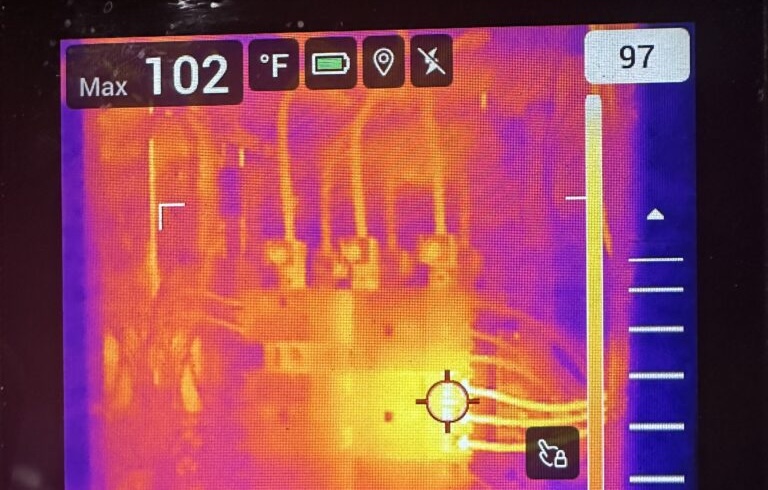
Thermal imaging is one of the fastest ways to move a maintenance issue from “we think something’s wrong” to “everyone can see it.” But speed alone doesn’t get repairs approved. What gets funded is clarity—reports that help finance, leadership, boards, and insurers make decisions without sitting through a technical deep dive.
That’s where many facility teams lose momentum. A report may include a striking hotspot and a note that says “repair recommended,” but for non-technical stakeholders, that’s not enough. They don’t know what asset they’re looking at, how serious the risk really is, what happens if nothing is done, or what action they’re being asked to approve. A thermal image is persuasive, but only when it’s translated into outcomes and next steps.
Thermal images work because they make invisible conditions visible. “Overheating” is easier to understand than “increased resistance,” and a color-coded anomaly quickly conveys urgency. Time-stamped images also strengthen documentation, whether the goal is budget justification, compliance records, or insurance files. Still, the image alone rarely answers the questions stakeholders care about most: What asset is this? How bad is it under real operating conditions? What’s the risk of waiting? And what exactly needs to be done?
Precision matters here. Thermography is excellent at identifying temperature anomalies that may indicate electrical resistance, imbalance, overload, friction, misalignment, or insulation and moisture issues. It supports prioritization and, when repeated under similar conditions, can show trends over time. What it does not do on its own is prove root cause. A hotspot might be influenced by load, design, environmental factors, or even reflections from shiny surfaces. Being clear about what thermography can and can’t confirm builds credibility—especially with finance teams, safety leaders, and insurers.
Decision-ready reports share a common structure. Every finding should pair a thermal image with a visible-light photo from the same viewpoint, so stakeholders can immediately see what asset is involved. Asset identification needs to match how the facility actually operates—building, room, panel or motor ID, and what that component feeds or supports. If someone unfamiliar with the site can’t locate the asset from the report alone, approvals slow down.
Operating conditions are just as critical. Thermal severity depends heavily on load and context, so documenting whether equipment was at steady-state, approximate load levels, ambient conditions, and any access limitations protects the finding from later pushback. This is often the difference between a quick approval and the dreaded question: “Was it actually under load?”
Severity should be framed in terms stakeholders understand: priority. A simple scale—Critical, High, Moderate, Monitor—helps reviewers quickly see what needs immediate action versus what can wait for a planned outage. When temperature rise is referenced, it should always be explained relative to something meaningful, such as adjacent phases, similar components, or baseline readings.
Most importantly, every finding should end with a clear recommendation. Not “repair recommended,” but what to do, who should do it, and by when. If verification is needed before a final fix, that step should be stated explicitly. This turns a thermal finding into a work order instead of a discussion point.
Business impact is where non-technical approvals happen. Framing findings in terms of downtime exposure, safety risk, compliance requirements like NFPA 70B, or insurance documentation makes the consequence of inaction clear—without exaggeration. Planned repairs versus emergency failures is usually a comparison leadership understands instantly.
The common pitfalls are predictable: missing load context, reflections mistaken for hotspots, vague language, no prioritization, or incomplete asset identification. Each one introduces friction that slows approvals and erodes confidence. Avoiding them isn’t about adding complexity—it’s about consistency.
The takeaway is simple. Thermal imaging doesn’t deliver value because it produces compelling pictures. It delivers value because it supports decisions. When findings are presented as a prioritized plan—what it is, where it is, how severe it is under load, what to do next, and why it matters—repairs move faster, budgets clear sooner, and risk is addressed before it turns into downtime.
In short: don’t deliver images. Deliver approvals.