
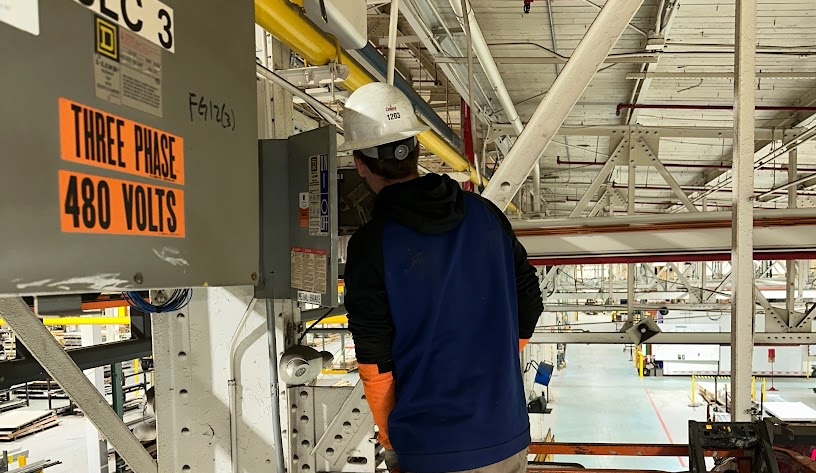
Preventative vs. Reactive Spending
For facility and maintenance directors, the shrill ring of a phone in the middle of the night often signals the start of a familiar, costly emergency. A critical production line has halted, an HVAC system has failed, or an electrical panel has tripped, grinding operations to a standstill. This is the chaotic, budget-draining reality of a reactive maintenance model—an endless cycle of emergency repairs that treats symptoms instead of preventing the disease.
If you’re constantly battling unpredictable budgets and justifying emergency spending, it’s time to shift your approach. Moving from a reactive problem-solver to a strategic financial planner isn’t just possible; it’s essential for long-term operational stability and financial control.
The Hidden Iceberg: Calculating the True Cost of Reactive Maintenance
The invoice for an emergency repair is only the tip of the iceberg. The true cost of an unexpected equipment failure goes far beyond parts and labor. To make a compelling case for change, you must account for the full financial impact. When the next emergency strikes, calculate the total cost using this framework:
- Direct Repair Costs: This is the obvious one—the bill for parts, materials, and internal or external labor.
- Lost Productivity & Downtime: What is the revenue value of every hour your operations are down? Factor in idle employee wages, missed production targets, and supply chain delays.
- Ancillary Costs: Think about the premium you pay for expedited shipping of parts, rental equipment to bridge the gap, or overtime pay to get back on schedule.
- Safety & Compliance Risks: A reactive failure can lead to safety incidents, resulting in injury, workers’ compensation claims, and potentially severe OSHA fines. Furthermore, repeated electrical system failures can jeopardize your compliance with standards like NFPA 70B.
- Reduced Equipment Lifespan: Emergency repairs are often patchwork fixes designed to get things running now. This approach can strain equipment, leading to more frequent breakdowns and a shorter operational life, accelerating capital replacement costs.
When you add up these figures, the small number on the repair bill transforms into a staggering sum that leadership can’t ignore.
The Strategic Shift: Forecasting Savings with Preventative Maintenance
Contrast the chaos of reactive spending with the predictability of a preventative maintenance (PM) model powered by advanced diagnostics. This is where technology like thermal imaging becomes a game-changer. It transforms invisible threats into visible, actionable solutions.
Thermal imaging, or infrared thermography, serves as your facility’s early warning system. By detecting minute temperature variations in your electrical and mechanical systems, certified thermographers can identify deteriorating components, overloaded circuits, and excessive friction before they fail. This non-destructive testing method provides the data needed to move from crisis management to strategic planning.
Building the ROI Argument for a Planned Budget
Armed with the true cost of being reactive, you can now build a powerful ROI argument for investing in a preventative thermography program. The goal is to demonstrate how a planned, proactive budget offers far greater financial control and operational stability.
- Quantify Your Risk: Start with your most critical assets. Using the cost framework above, present the potential financial loss if one of them were to fail unexpectedly. This is your “cost of inaction.”
- Project Cost Reductions:
- Maintenance Savings: A planned repair during scheduled downtime is exponentially cheaper than an emergency fix. There are no expedited shipping fees, overtime is minimized, and you can bundle tasks for greater efficiency.
- Energy Savings: Thermal imaging scans of your building envelope can pinpoint areas of significant heat loss or cooling escape. The same goes for inefficient motors or HVAC equipment. Correcting these issues can lead to immediate and substantial reductions in your monthly utility bills.
- Downtime Avoidance: This is your most significant win. Show how preventing just one major outage a year can save hundreds of thousands of dollars in lost production, preserving revenue and protecting customer relationships.
- Demonstrate Financial Control: Lay out two budgets side-by-side. One is the volatile, unpredictable reactive budget with massive spikes in spending. The other is a smooth, planned PM budget. The visual contrast makes the choice obvious: one represents chaos, the other control.
From Firefighter to Financial Planner
Adopting a preventative maintenance strategy does more than just save money; it transforms your role. You are no longer just the person who fixes things when they break. You become a strategic partner who proactively protects the company’s assets, ensures a safe and compliant work environment, and contributes directly to the financial health of the organization.
By leveraging the predictive power of thermal imaging, you can escape the endless cycle of emergency repairs. You can build a predictable, stable budget, extend the lifespan of your critical infrastructure, and prove the immense value of proactive facility management.
Ready to transform invisible threats into visible solutions?
The certified thermographers at Louisville Infrared, led by veteran Jack McNear, provide the non-destructive, precision diagnostics needed to build your ROI case. We empower you to detect electrical hotspots, mechanical wear, and building envelope issues before they become costly catastrophes. Contact us today to learn how a preventative maintenance program can bring financial predictability and operational stability to your facility.